Two travelers can book the same star-rated hotel and come home with completely opposite stories. One raves about the location and sleeps like a dream; the other complains about thin walls, a cramped room, and a tedious walk to everything. The difference usually isn’t luck — it’s fit. The right hotel for a trip depends on how you actually travel, not on stars alone.
That’s what this guide is for. We’ll start with your travel style rather than the star rating, then move through matching the location to your itinerary, picking amenities you’ll actually use, setting a realistic budget and booking window, and choosing the right room category and view. You’ll also learn to read reviews like a detective, filtering out noise and spotting red flags, before a final section pulls everything together into a simple approach you can repeat on every trip.
Start With Your Travel Style, Not the Star Rating
Before you compare star ratings or scroll through photo galleries, take a step back and ask one simple question: what kind of trip is this? A hotel that shines on a city sightseeing break can feel completely wrong for a beach week, and a resort built for slow relaxation might frustrate an adventure traveler who just needs a clean bed and an early breakfast. Common trip types include city sightseeing, beach relaxation, adventure basecamp, wellness retreat, and remote nature escape, and each one rewards a different kind of property.
Next, think honestly about how you will use the room. If your days are packed with museums, markets, and neighborhoods, the room is essentially a crash pad, and a simple, comfortable base will serve you well. If you plan to linger, work, read, or simply watch the world go by from your window, then the room itself becomes part of the experience, and it makes sense to pay for space and comfort rather than location alone.
Match the Pace of Your Trip to the Property
Fast itineraries favor central, efficient hotels where check-in is quick, logistics are smooth, and nothing slows you down. Slow trips work the other way: they reward resorts and lodges with strong on-site spaces, because the property itself is where you will spend much of your time. Deciding your pace early helps you avoid paying for amenities you will never use, or missing the ones you will.
Finally, decide who is traveling, because a solo city break, a couple’s escape, and a family trip rank priorities very differently. Solo travelers often care most about location and safety, couples about atmosphere and shared spaces, and families about room size, kitchenettes, and kid-friendly facilities. Write down your trip type, your pace, and your group before you start searching, and you will filter out half the options in minutes.
Match the Location to Your Itinerary
In big cities, the distance between your hotel and public transit quietly shapes every day of the trip. A hotel within 1 km of a metro or bus stop saves roughly 30-60 minutes of daily transit time, which adds up to several recovered hours over a long weekend. Before booking, drop the pin on a map and look for stations that serve more than one line — that gives you a backup route when a line closes for maintenance.
Beach and island trips involve a different calculation. A beachfront room puts the sand a few steps from your door, but dinner may mean a taxi or resort shuttle into town every evening. A hotel in the town center flips that trade-off: restaurants and shops are a short walk away, while the shoreline becomes a morning commitment. Decide honestly where you will spend most of your hours — by the water or among the cafes — and book on that side.
Remote nature stays make the biggest trade of all: convenience for scenery. Lodges deep in a national park or up a mountain valley can involve a small-plane hop, a boat crossing or a long drive on rough roads after you land. Confirm the transfer time from the nearest airport with the property before booking, and if the journey eats most of a day, treat arrival day as part of the experience rather than a wasted afternoon.
Finally, look at what surrounds the hotel after dark. A lively district puts bars, late-night food and live music within a short stroll — ideal if nights out are the point of the trip. Light sleepers should read the same map very differently: nightlife streets tend to carry sound well into the early hours, and the problem gets worse if your room relies on an open window instead of air conditioning.
- Test the walk, not the straight line. A hotel that looks 500 m from the station can turn into a 15-minute hike if a river, highway or rail yard sits in between, so trace the actual pedestrian route in a map app before you commit.
- Watch out for business districts on weekends. Areas built for office workers often empty out after Friday, and some cafes and restaurants close with them — a surprise if you chose the area for lower rates but still want dinner options on foot.
- Split the stay for late arrivals. If your flight lands late, an airport-side hotel for the first night can beat a cross-city transfer to your main property, letting you move on rested the next morning.
- Ask how often shuttles and taxis actually run. On islands and in resort zones, transport frequency can drop outside the busiest weeks, so confirm the timetable for your travel dates instead of assuming the high-season schedule applies.
Pick Amenities That Fit How You Travel
Amenities are where travel style really shows up. If you are in a city for sightseeing, a pool or spa will mostly go unused, so prioritize the practical stuff instead: fast, reliable Wi-Fi for planning routes and uploading photos, 24-hour check-in for late arrivals, and luggage storage so you can keep exploring after checking out. Skipping the spa you will never visit often means you can spend that money on a better location.
Slow, restorative trips flip that logic completely. Here, the on-site spaces are the point, not a bonus. Look for rooftop pools, spa circuits, shaded terraces and quiet lounges with a view, and picture yourself actually spending an afternoon in them. A property designed for lingering, like the rooftop zen pools at Aman Tokyo, shows how much a single well-designed space can shape an entire stay.
Adventure travelers should hunt for practical extras rather than pampering. Early breakfasts matter when trailheads and dive boats leave at dawn, and gear storage keeps muddy boots and wet wetsuits out of your room. Late check-out is another underrated win after a long activity day.
Wellness-focused travelers should judge the setting itself before scanning the amenity list. Silence, water, mountain air or desert stillness are amenities no gym can replace, so choose properties where the environment does most of the work.
- Early breakfast or grab-and-go options: ask whether the kitchen opens before sunrise tours depart, or whether they pack a takeaway box the night before.
- Drying rooms and gear storage: useful for skis, surfboards, hiking boots and dive equipment, and far better than dripping kit in your wardrobe.
- Guest laundry: on multi-week adventure trips, being able to wash clothes on-site can cut your packing in half.
- Spa circuits, not just a single treatment room: look for saunas, plunge pools and thermal areas you can use daily rather than booking one massage.
- Quiet hours and soundproofing policies: for wellness stays, check whether the property enforces silence around pools, lounges and treatment areas.
Set a Realistic Budget and Booking Window
Before you fall in love with a hotel photo, decide what you can actually spend per night. A clear nightly range does two things at once: it filters out properties that would stretch your trip too thin, and it keeps you from dismissing solid options that simply lack a famous brand name. Budget works best when you set it first and search second, not the other way around. It also speeds up your search, because you can skip entire price tiers instead of comparing rooms you were never going to book anyway.
- Anchor your nightly range. As a broad guide, budget hotels typically run $50-120 per night, mid-range properties sit between $120-300, and luxury starts around $300 and climbs from there. These are starting points, not rules, so adjust for the destination’s cost of living. A mid-range budget that feels generous in one country may barely cover a basic room in another, so research local price levels before you lock in a number.
- Time your booking. For the best rates, book domestic hotels 2-3 months ahead and international hotels 4-6 months ahead. Prices tend to rise in the final weeks, so last-minute deals are less reliable than they used to be. Booking early also gives you a wider choice of room categories, which matters if you want a specific bed configuration or view.
- Push earlier for peak windows. Popular seasons fill fast and price accordingly. For December-January beach trips or July-August in Europe, aim to book 6-9 months ahead to avoid paying a premium for whatever rooms remain. In peak season, the best-located properties often sell out first, leaving late bookers with the leftovers.
- Choose flexible rates when plans are uncertain. Flexible rates with free cancellation usually let you cancel 24-72 hours before check-in. They often cost slightly more, but that small difference buys you room to change dates or switch hotels without losing money. If your flights are still up in the air, that flexibility is usually worth the extra few dollars a night.
- Spend the savings where they matter to you. A cheaper hotel in a great location with a better-view room often beats a pricier property in a worse spot. Put your budget toward the upgrades that match how you travel, whether that is a central address, a larger room or a memorable view from the terrace.
A budget is not about spending less, it is about spending deliberately. When you know your range and book inside the right window, you stop chasing deals and start choosing hotels on merit. That is when the money you save goes exactly where your trip needs it most, and every dollar you spend feels like a choice rather than a compromise.
Choose the Right Room Category and View
Once you have the right hotel, the room category is where your money can make the biggest difference. A base room and an upgraded category often cost only a modest amount more, yet the upgrade can transform a long stay. A corner room gives you two walls of windows and more privacy, while a view-facing room means you wake up to something beautiful instead of a blank wall. If you plan to spend real time in your room, that small daily bump is usually money well spent.
Quiet matters more than most travelers expect
If good sleep is a priority, be specific when you book or check in: ask for a higher floor, away from the elevators, and not facing the street. Street-facing rooms pick up traffic noise, and rooms near elevator banks hum all night. A short email or a polite request at the desk often solves this at no extra cost, but it helps to mention it in advance on busy nights.
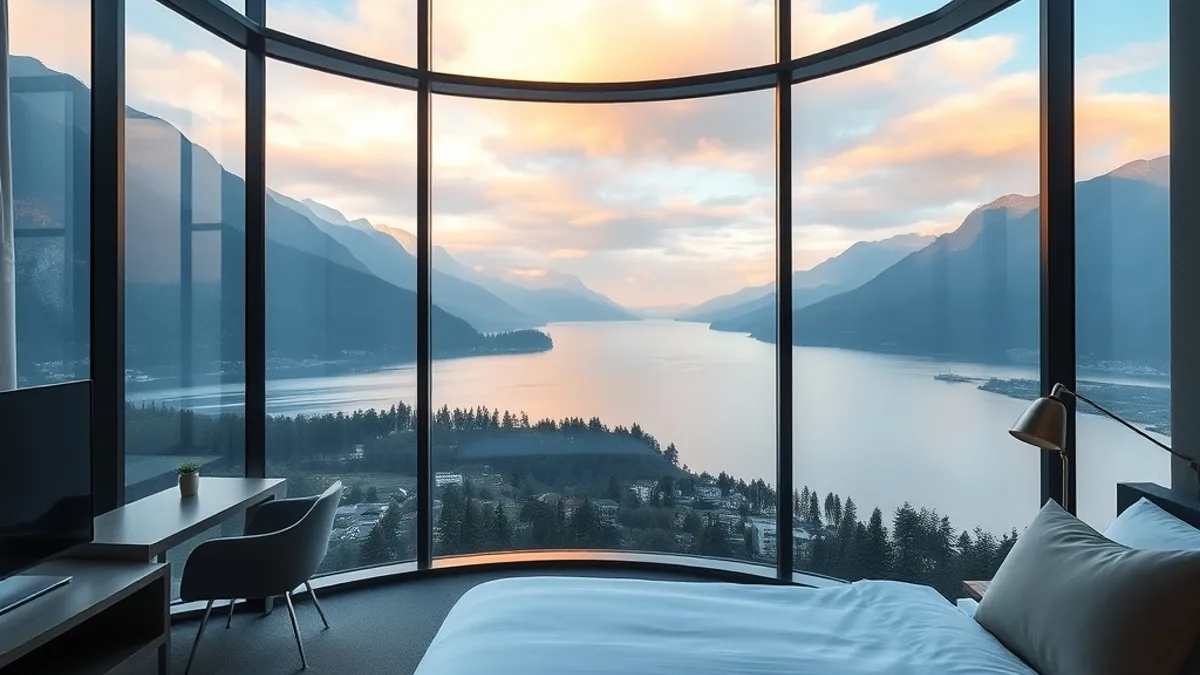
At scenic destinations, the view itself can become the highlight of the trip. Some properties are built almost entirely around it, like the rooftop highland rooms at Fogo Island Inn in Canada, where the room’s outlook over the North Atlantic is the reason to book. In places like this, prioritize the view over lobby glamour, since you will remember the sunrise from your terrace long after you forget the marble in the entrance hall.
Finally, confirm the bed configuration and the room size in square meters before you pay. Photos distort space, and a “double” can mean one large bed or two twins pushed together. For families or long stays, a cramped layout wears thin fast, so check the floor plan, count the beds, and make sure the configuration actually matches your group.
Read Reviews Like a Detective
Reviews are the closest thing to a background check you can run before booking, but only if you filter them properly. Start with volume: prioritize hotels with 200+ reviews and an average rating of 4.0 or higher. A deep, consistent pool of scores is hard to fake, and weeding out thin track records removes the one-off properties whose ratings rest on a handful of visits.
Next, put an expiration date on everything you read. Stick to reviews from the last 6 months, because management changes and renovations reset a hotel’s whole character — the team, the breakfast, even housekeeping standards can turn over. A glowing write-up from three years ago describes a property that may no longer exist, so sort by most recent before you start reading.
Then search the review text for the words that match your travel style: ‘quiet’, ‘walkable’, ‘breakfast’ or ‘shuttle’. This cuts straight to the answers you actually need instead of skimming hundreds of generic comments. Finally, weight the middle of the scale most heavily. Detailed three- and four-star reviews are usually the most representative, because those guests weighed real trade-offs before writing. Glowing fives can rest on one great cocktail, and furious ones on a single bad night — both extremes tend to describe the moment, not the hotel.
- Search the opposites too. Run “noisy”, “thin walls” or “construction” through the same review search. If several recent guests independently flag the same problem, treat it as a pattern rather than one grumpy traveler.
- Filter by traveler type. Most booking platforms let you sort reviews by family, couple, solo or business traveler, so you can read notes from people whose trip resembles yours instead of strangers with different priorities.
- Study guest photos and their dates. Traveler-uploaded pictures show stains, dated bathrooms and views of neighboring rooftops that official galleries crop out — and a crisp photo taken years ago proves little about today’s condition.
- Read how the hotel answers criticism. A specific, calm reply that describes a fix is a better signal than a perfect score; a defensive, copy-pasted response shows you what to expect when something goes wrong during your own stay.
- Cross-check on a second platform. If one site shows a noticeably higher average than another for the same property, put more trust in the recent written reviews across both than in any single number.
Putting It All Together
Two people can stay in the same well-rated hotel and come home with completely opposite stories, and now the reason is clear: the right hotel depends on how you actually travel, not on ratings alone. An honest picture of your travel style comes first, and then location, amenities, budget, room category and reviews get matched to that picture instead of to a number.
Timing brings the last piece under control. Booking a few months ahead on a flexible rate keeps both the price and the plans easy to adjust, which matters most when your itinerary is still taking shape. When every filter points the same way, you have found your hotel, not just a well-rated one. If this helped you plan your next stay, leave a comment or share this article with a fellow traveler.