Tuscany is bigger than it looks on a map, and each corner has its own personality: vineyard hills, cypress-lined valleys, long stretches of coast, walled towns. That variety is the region’s charm, but it’s also the trap. Pick a base too far from the restaurants, vineyards or beaches you came for, and you can spend the whole week driving instead of relaxing. That’s why the first decision—where to rent a villa in Tuscany—matters almost as much as the villa itself.
This guide walks through the areas that work best for villa holidays: Chianti, the wine country between Florence and Siena; Val d’Orcia, with its cinematic hills and slow mornings; the coast, covering the Maremma and the Etruscan Coast; and the quieter northwest around Lucca and Pistoia. You’ll also get practical advice on when to book and what to budget, plus tips for matching each area to your travel style—so you can find a Tuscan base that genuinely fits.
Chianti: Vineyards Between Florence and Siena
Chianti is a natural fit for wine lovers who also want city time. Villas here sit in the hills between Florence and Siena, typically a 30–60 minute drive from both, so a day trip to the Uffizi or Siena’s cathedral is an easy out-and-back rather than an expedition. You can leave after breakfast, wander the cities before the crowds thicken, and be back at your own pool by late afternoon.
The Landscape and the Villa Stock
The scenery is the classic Tuscan postcard: rolling hills planted with vineyards and olives, cypress-lined driveways, and stone farmhouses on every ridge. Because so many of those farmhouses have been restored, Chianti has a dense concentration of villas and working wine estates, from small converted farmhouses to sprawling properties with their own vines. Some sit directly on winery grounds, which means tastings a short stroll from your terrace rather than another drive.
A few practical notes before you compare listings. You will want a rental car, since restaurants, wineries and villages are spread out and hillside roads are slow. Towns such as Greve in Chianti, Panzano, Castellina and Radda make useful reference points when you’re weighing locations, and the scenic Chiantigiana road threads through much of the area. Check the actual drive time from any villa, because a straight-line distance on the map can hide a winding route.
When Chianti Delivers the Best Value
Aim for May or late September if budget matters. Rates in these shoulder weeks typically sit below the €2,000–€15,000 band that peak weeks in high season command, yet the weather is usually warm enough for long dinners outside. Late September often brings the grape harvest, so the estates around you tend to be at their most active.
Two things to weigh against that value. Shoulder-season weeks in Chianti are popular with repeat guests, so good villas can fill early. And if swimming matters to your group, ask the owner whether the pool is heated in spring and fall, since unheated pools can be bracing outside the summer months.
Val d’Orcia: Cinematic Hills and Slow Mornings
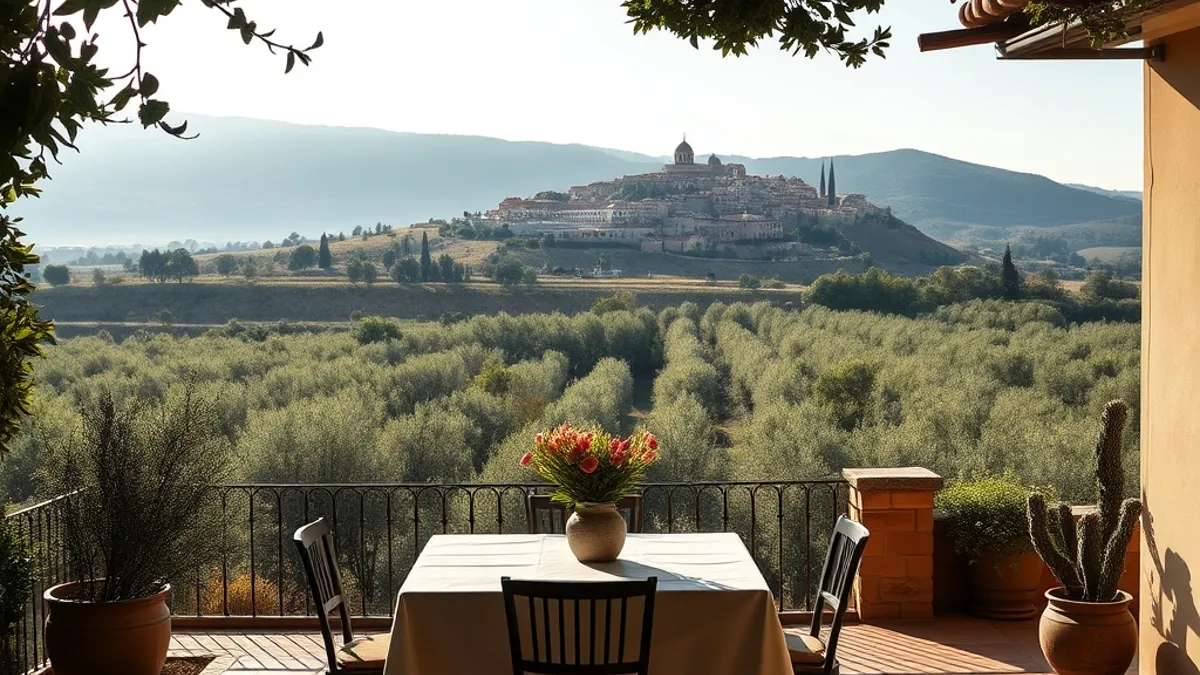
Val d’Orcia is the Tuscany of postcards and film sets: soft clay hills striped with wheat, lone cypress trees lining gravel roads, and stone farmhouses that look like they’ve been there since the Middle Ages. The area sits south of Siena, around the towns of Pienza and Montepulciano, roughly 1.5–2 hours’ drive from Florence. That distance matters. You trade easy city day trips for landscapes you’ll struggle to find anywhere else in Italy.
The region is also Brunello wine country, with Montepulciano’s Vino Nobile and Montalcino’s Brunello both produced nearby. Many villas sit on or next to working wine estates, and tastings are often a short drive down a country road. In spring the hills glow green; in September and early October the harvest adds color and a festive mood to small towns.
Hot springs and slow days
One of Val d’Orcia’s underrated draws is its thermal tradition. Towns like Bagno Vignoni and San Quirico d’Orcia have built their identity around hot springs, and the area around Saturnia’s cascades is close enough for a day trip. Check current access rules and fees before you go, as some pools are free and others are managed spa facilities.
Choose a villa here if scenery and quiet top your list. You’ll drive more than you would in Chianti, restaurants and shops can be a 15–20 minute drive away, and evenings are dark and still rather than lively. For couples and anyone craving slow mornings with coffee on a terrace overlooking the hills, it’s hard to beat.
Coastal Tuscany: Maremma and the Etruscan Coast
Maremma and the Etruscan Coast are the pick for travelers who want sand and saltwater without giving up the Tuscan countryside. This stretch of southern coastline sits roughly 1.5–2.5 hours by car from both Florence and Pisa airports, so it works as a proper destination rather than a base for city-hopping. Villas here often pair olive groves, cork oaks and grazing land on one side with a short drive to the beach on the other.
A wilder shoreline with real villages
This is the wildest, least polished stretch of the Tuscan coast: long sandy dunes backed by pine forest, rocky coves around Monte Argentario, and the Maremma Regional Park, where hills drop almost straight into the sea. It feels noticeably quieter than the developed resort strips further north, and much of the shoreline still belongs to locals more than to resorts.
The anchor towns are hilltop rather than beachfront. Castiglione della Pescaia is the classic example: a former fishing village wrapped around a headland, with pastel houses, a small working harbor and beaches on either side. Talamone, Porto Ercole and the wine village of Bolgheri inland add more character, and Etruscan sites such as Populonia reward a half-day away from the sand.
Choose it if swimming and seafood top your list
Pick this area if swimming and seafood matter as much as sightseeing. Mornings can go to the water, afternoons to a pool with a sea view, and dinner to grilled catch of the day at a harbor-side trattoria instead of another museum stop. The trade-off is distance: Florence and Siena are too far for casual day trips from here, so save the big cities for a separate stay.
You’ll want a rental car, and it pays to match the villa to your beach style. Walking distance to the sand suits families with small children, while the wilder southern stretches reward travelers who don’t mind a drive each morning. Summer traffic along this coast is real, so check the actual drive time from your arrival airport before you book.
Lucca, Pistoia and the Quiet Northwest
If your priority is value rather than famous views, the northwest corner of Tuscany deserves a serious look. Around Lucca and Pistoia, villa prices typically sit below what you’d pay in Chianti or Val d’Orcia for the same amount of space. Because this area is overlooked by many international travelers, your budget often stretches to a larger property, a bigger pool, or simply a longer stay.
The location works harder than its low profile suggests. Lucca itself is one of Tuscany’s most charming cities, with its intact Renaissance walls you can walk or cycle on top of. From a villa in the surrounding hills, you’re well placed for day trips to Pisa, and the Garfagnana mountains to the north offer hiking, caves and dramatic gorge scenery when you want a break from cypress-lined roads.
Working farms, not show villages
What sets this area apart is how little it performs for tourists. Many rental villas here are genuine working farms, with owners who still tend olive groves or keep sheep and sell you their own oil and cheese at the door. You’ll shop in local markets alongside residents rather than competing for tables in restaurant-lined squares.
Groups of eight or more should pay particular attention: the large, traditional farmhouses in this part of Tuscany tend to come at lower weekly rates than equivalent properties in the better-known southern valleys. Check current availability and pricing with rental agencies, as rates vary by property and season, but the general pattern holds: this is where your euros go furthest.
When to Book and How Much to Pay
The most desirable villas in Chianti and Val d’Orcia — the ones with long views, a level private pool and a village you can walk to for dinner — get reserved first. For a July or August stay in either area, plan to book 6–12 months ahead. Start searching in spring instead, and you will usually be choosing from what other travelers have given up, not from the top of the list.
Set your budget expectations early. Weekly rates vary widely depending on area, size and season, and the top of the range belongs to the June-to-August high season. A couple in a modest farmhouse tends to sit toward the lower end, while a large group wanting a staffed estate with a heated pool will find itself at the upper end. Prices soften outside the peak months, but so does availability — the most sought-after properties often fill their May and September weeks surprisingly early, especially around the Italian school holidays.
Timing is not the only constraint. Most villas in Tuscany require a minimum stay of 7 nights in summer, so short-notice weekend trips are rarely an option during high season. If your dates are flexible, ask agents about shoulder-season availability: the same farmhouse that is fully booked for August can have open weeks in early October, often with milder weather and quieter roads as a bonus.
One practical tip: keep a shortlist of two or three properties rather than fixating on one. High-demand villas can receive multiple inquiries for the same week, and having backups means you can move quickly when your first choice opens up.
Matching the Area to Your Travel Style
Not every Tuscan villa suits every traveler, and the area you choose should follow how you actually plan to spend your week. The biggest mistake is renting a remote farmhouse and then realizing every grocery run or dinner out requires a half-hour drive on dark country roads. Be honest about your priorities before you fall in love with a listing.
If this is your first trip to Italy and you’d rather not drive at all, base yourself close to Florence. Villas within easy reach of the city put you near train lines and frequent bus connections, so you can leave the car behind and still reach Siena, Pisa or Bologna for day trips. A car-free stay trades some rural romance for real convenience, and for many first-timers that’s the right trade.
Large groups should look northwest. Around Lucca, Pistoia and the Garfagnana, the farmhouses tend to be bigger and the weekly rates noticeably lower than in Chianti or Val d’Orcia. A villa sleeping 10 or more in the northwest can cost a fraction of what a comparable property near Florence commands in peak weeks.
Couples and honeymooners get the opposite advice: go remote. The Val d’Orcia, in the quieter south of the region, has scattered estates where your nearest neighbor may be a kilometer away. Privacy, silence and long slow mornings are exactly what you’re paying for there.
- First-timers without a car: pick a villa within walking distance or a short taxi ride of a train station, so day trips don’t depend on a rental car.
- Groups of 8 or more: ask whether the farmhouse has enough bathrooms and a shared dining table that actually seats everyone, since older properties vary widely.
- Honeymooners: prioritize estates with a private pool set away from the main farmhouse, and confirm the pool is exclusively yours rather than shared with another rental unit.
Finding Your Tuscan Base
Tuscany is bigger and more varied than most first-time visitors expect, and picking the wrong corner can shape your whole week. The simplest way to decide: choose Chianti if wine tasting and easy day trips to Florence and Siena top your list, Val d’Orcia if you’d rather wake up to film-postcard scenery and unhurried days, the coast if beaches and seafood matter as much as sightseeing, and the quieter northwest if you’d rather trade polish for value and space.
Your practical details narrow things down too. Booking 6–12 months ahead for July and August, working within weekly rates of roughly €2,000–€15,000, and accepting a 7-night minimum in summer all influence which areas are realistic for your dates and budget. Group size and travel style matter just as much as scenery, so settle those first before comparing individual villas. If this helped you plan your trip, leave a comment or share the article with your travel companions.